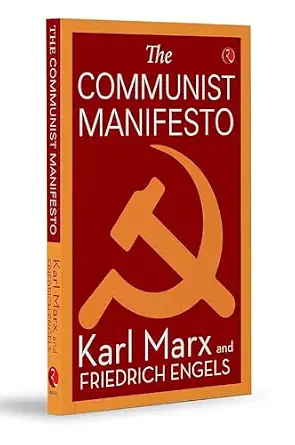
Karl Marx (1818-1883) was a German philosopher, political economist, historian, political theorist, sociologist, communist, and revolutionary, whose ideas played a significant role in the development of modern communism. Marx summarized his approach in the first line of chapter one of The Communist Manifesto, published in 1848: "The history of all hitherto existing society is the history of class struggles." Marx argued that capitalism, like previous socioeconomic systems, would inevitably produce internal tensions which would lead to its destruction. Just as capitalism replaced feudalism, he believed socialism would, in its turn, replace capitalism, and lead to a stateless, classless society called pure communism. This would emerge after a transitional period called the "dictatorship of the proletariat": a period sometimes referred to as the "workers state" or "workers' democracy". In section one of The Communist Manifesto Marx describes feudalism, capitalism, and the role internal social contradictions play in the historical process: We see then: the means of production and of exchange, on whose foundation the bourgeoisie built itself up, were generated in feudal society. At a certain stage in the development of these means of production and of exchange, the conditions under which feudal society produced and exchanged...the feudal relations of property became no longer compatible with the already developed productive forces; they became so many fetters. They had to be burst asunder; they were burst asunder. Into their place stepped free competition, accompanied by a social and political constitution adapted in it, and the economic and political sway of the bourgeois class. A similar movement is going on before our own eyes.... The productive forces at the disposal of society no longer tend to further the development of the conditions of bourgeois property; on the contrary, they have become too powerful for these conditions, by which they are fettered, and so soon as they overcome these fetters, they bring order into the whole of bourgeois society, endanger the existence of bourgeois property.Marx argued for a systemic understanding of socio-economic change.